Intelsat 901 / MEV1 mission

Footprints should be fairly similar. Switching date is currently unknown - it will depend on how well the tow back down to geostationary orbit goes. Extensive testing will have to take place to prove the combined MEV1/I901 stack is structually stable before any movement can be contemplated.

Remember this is a completely new concept so a lot of investigative work will be going on in the background to validate the concept.

Interesting stuff.

Why is the move down to geostationary harder to achieve than a move up?

Also, is the fuel the main limiting factor in a satellite's life? Can the 901 satellite expect to largely function as well as when launched even when 24 years old?
 
Interesting stuff.

Why is the move down to geostationary harder to achieve than a move up?

Also, is the fuel the main limiting factor in a satellite's life? Can the 901 satellite expect to largely function as well as when launched even when 24 years old?

Well MEV1 has to move both its own mass plus the dead weight of I-901, plus kill the accumulated inclination plus wait for the right time to slide back down towards 27.5W dodging all the other satellites (both operational & derelict) that are on or around the geostationary arc. Its thrusters are electric grid & the pushing power of those is tiny compared to chemical hydrazine thrusters.

9 times out of 10 the limiting factor in a satellites useful life as a tv broadcast bird is depletion of station keeping fuel. There is a fine trade off between adding extra fuel before launch for longer station keeping - which costs more to launch . Or tanking less fuel for a cheaper launch but reducing the useful none inclined life.

Its fairly rare for a bird to have to be retired due to electronics failure. It does happen & itseems more breakdowns have happened in recent years but thats probably just due to the higher number of tv satellites being launched compared to 10-15 years ago. In the case of I-901 there will be contingency plans in place to turn off transponders if the solar sails have degraded.. And lets be honest 27.5W isnt exactly the busiest slot on the European arc. There wouldnt be much lost if a couple of tps had to be turned off at some point

As I said earlier there will be a LOT of testing checking and rechecking of everything before the MEV1 thruters are lit up in anger. Northrop has to prove to Intelsat and future custromers the combined stack is stable and isnt going to do anything unexpected - which will be why I-901 ws punted up to graveyard orbit for this to be tested. If anything does go wrong and debris is created the birds are safely out of the way of the operational sats. In a few years time this will be routine and the MEV's will do their stuff directly onto satellites whilst they are operational on the orbital geosat arc.

Intelsat must be confident this is going to work - MEV2 is already booked for a mission on another Intelsat bird (identity not released yet)
 
Last edited:
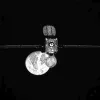
This is a magnificent pic of I-901 taken from MEV1 prior to mating

ERuPbehWAAEqkFn.webp


This is probably the first time the general public have had space - space images of one satellite from another.
 
I make you right on Intelsat 10-02 @ 1° west needs a help by 2021 to stay in geostationary orbit so that will be Mev-2's mission.
 
They are continuing the race towards 27,5°W (currently they are around at 61°E). The inclination is also gradually decreasing, they have gone from 1,6° to 1,1°.

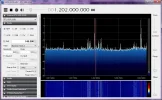
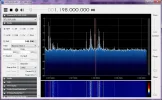
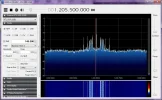
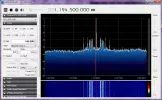
The active frequencies of telemetry are 3948,00 R and 3952,00 R (Intelsat 901), 3944 50 L and 3955.50 L (MEV-1).
 

Attachments

  • IS-901_3948.00R.webp
    IS-901_3948.00R.webp
    79.3 KB · Views: 7
  • IS-901_3952.00R.webp
    IS-901_3952.00R.webp
    76 KB · Views: 6
  • MEV-1_3944.50_L.webp
    MEV-1_3944.50_L.webp
    67.7 KB · Views: 8
  • MEV-1_3955.50_L.webp
    MEV-1_3955.50_L.webp
    70.8 KB · Views: 26
Well MEV1 has to move both its own mass plus the dead weight of I-901, plus kill the accumulated inclination plus wait for the right time to slide back down towards 27.5W dodging all the other satellites (both operational & derelict) that are on or around the geostationary arc. Its thrusters are electric grid & the pushing power of those is tiny compared to chemical hydrazine thrusters.

9 times out of 10 the limiting factor in a satellites useful life as a tv broadcast bird is depletion of station keeping fuel. There is a fine trade off between adding extra fuel before launch for longer station keeping - which costs more to launch . Or tanking less fuel for a cheaper launch but reducing the useful none inclined life.

Its fairly rare for a bird to have to be retired due to electronics failure. It does happen & itseems more breakdowns have happened in recent years but thats probably just due to the higher number of tv satellites being launched compared to 10-15 years ago. In the case of I-901 there will be contingency plans in place to turn off transponders if the solar sails have degraded.. And lets be honest 27.5W isnt exactly the busiest slot on the European arc. There wouldnt be much lost if a couple of tps had to be turned off at some point

As I said earlier there will be a LOT of testing checking and rechecking of everything before the MEV1 thruters are lit up in anger. Northrop has to prove to Intelsat and future custromers the combined stack is stable and isnt going to do anything unexpected - which will be why I-901 ws punted up to graveyard orbit for this to be tested. If anything does go wrong and debris is created the birds are safely out of the way of the operational sats. In a few years time this will be routine and the MEV's will do their stuff directly onto satellites whilst they are operational on the orbital geosat arc.

Intelsat must be confident this is going to work - MEV2 is already booked for a mission on another Intelsat bird (identity not released yet)

Forgot to say thanks! I;m surprised that just one satellite exists at some positions (e.g. 5 west). If there were a catastrophic failure, a replacement would surely take some time to arrive
 
It has happened - Eute W2 at 16E died a few years ago. As did Amos 5 at 17E. Plus others around the arc.

16E had satellites shifted from other positions quickly. Amos had to do without a bird at 17E for a long time (4 years give or take) until Amos 17 was bought into service
 
Eutelsat can easily move Eutelsat Hotbird satellite 13E from 13 east to 5 west as only 3 transponders are active on HB13E & these 2 satellites 13B & 13C currently only using 80% of the transponders available @ 13 east it is a bit of a no-brainer I do wonder if Eutelsat know what their satellites capacity is & the answer is they do not know because if they had known they would not have wasted millions of Euro's repositioning satellite dishes to 9 east :-rofl2 It is a very sad state of affair that Eutelsat find themselves in.
 
Eutelsat can easily move Eutelsat Hotbird satellite 13E from 13 east to 5 west as only 3 transponders are active on HB13E & these 2 satellites 13B & 13C currently only using 80% of the transponders available @ 13 east it is a bit of a no-brainer I do wonder if Eutelsat know what their satellites capacity is & the answer is they do not know because if they had known they would not have wasted millions of Euro's repositioning satellite dishes to 9 east :-rofl2 It is a very sad state of affair that Eutelsat find themselves in.

But if 5B went down (after 5a retired), several million french homes would be without any TV for a number of days. Surprised this is deemed acceptable
 
Millions of French homes have a terrestrial antenna that they may not used since their dish was installed.

They could try plugging the television into the other cable coming out the wall to get TNT services, if that fails to get a picture there is always the smart part of the set to stream content.
 
Nope - it will be weeks before MEV1/ I-901 takes over from I-907.
 
Maybe that is because you are in Portugal please update your info.

 
They are continuing the race towards 27,5°W (currently they are around at 61°E). The inclination is also gradually decreasing, they have gone from 1,6° to 1,1°.

The active frequencies of telemetry are 3948,00 R and 3952,00 R (Intelsat 901), 3944 50 L and 3955.50 L (MEV-1).

Blimey they are moving quickly. Now near 38E with the inclination down to about 1 degree. 23 degrees round the arc in under a week..
 
Back
Top